
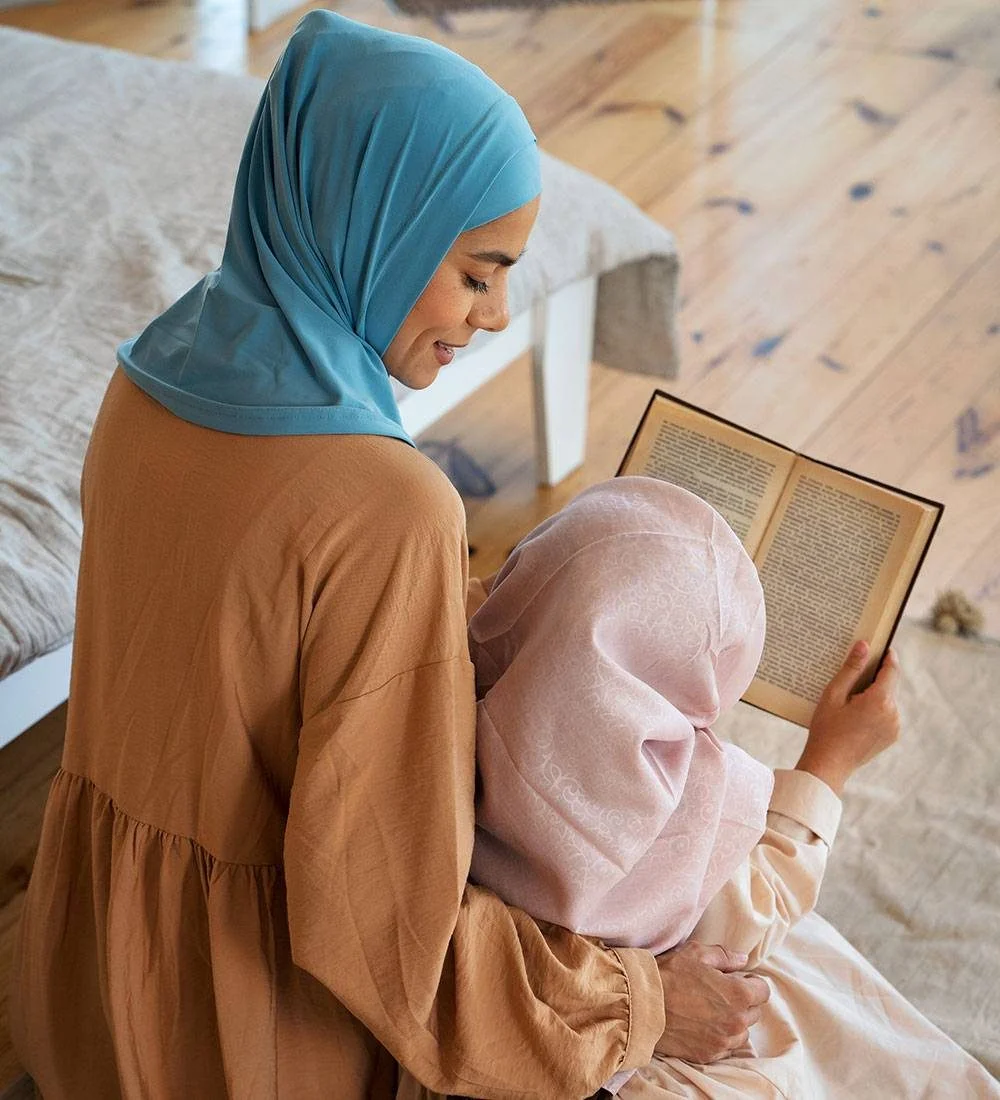
Every parent considering online lessons has the same thought and most never say it aloud. My child will be alone in a room, on a screen, with an adult I have never met.
It is a reasonable thought and it deserves a straight answer rather than reassurance. The honest position is that online one to one teaching has specific safeguarding requirements, they are not complicated, and a parent who applies them is in a stronger position than one dropping a child at a building and driving away. This guide sets out what to ask, what to set up at home, and what to do if something feels wrong.
Key Takeaways
- Is online riskier than a local class? Different, not automatically worse. You can supervise online directly.
- What matters most? All contact through you, on the academy’s platform, never privately with your child.
- Where should lessons happen? A shared room. Never a bedroom, never behind a closed door.
- What should I ask before booking? For the written safeguarding policy, and who the named lead is.
- What about teacher checks? Ask what vetting exists and understand its limits.
- What if something feels off? Act on it. You do not need proof to raise a concern.
Set the house rules first
These cost nothing and they do most of the work. Put them in place before the first trial lesson, not after you have decided you like the teacher.
- Shared room only. Kitchen table, living room, dining room. Never a bedroom and never behind a closed door.
- You are within earshot, every session, even when you are not watching.
- The account is yours, not your child’s. Your email, your phone number, your login.
- Camera on, both sides. A teacher who prefers their camera off should be asked why.
- No contact outside lesson time, and none directly with your child. Messages come to you.
- You can walk in at any point, and your child knows that.
Rule six matters more than it looks. A child who knows a parent might appear at any moment is in a fundamentally different position from one who knows the lesson is private, and so is the adult teaching them.
What to ask any academy before you book
Ask these before the trial, in writing, and keep the replies. Any legitimate provider will answer without hesitation.
- May I see your written safeguarding policy? Not a summary. The document.
- Who is your named safeguarding lead, and how do I contact them directly?
- What vetting do your teachers undergo?
- Can I join any lesson unannounced? The answer should be yes, without conditions.
- What platform do lessons run on, and is all communication logged?
- Are lessons recorded? If so, who can access them, and for how long are they kept?
- What is your policy on teachers contacting students directly? The answer should be that they do not.
A provider that treats these as unusual questions has told you something. A provider that has the policy ready has told you something better.
The honest answer on background checks
This is the part most academies avoid and you should understand it clearly.
A DBS check is a UK scheme. Teachers based outside the UK cannot hold one, and many online Quran academies employ teachers in other countries. So an academy claiming all teachers are DBS checked is either UK based or overstating.
That does not make overseas teaching unsafe. It means the honest question is not “are they DBS checked” but what vetting do you actually do, and what does it cover? Reasonable answers include identity verification, qualification verification, references, local police clearance where available, and supervision arrangements.
The stronger protection in practice is structural rather than documentary. All contact through the parent, on a logged platform, with a parent free to walk in at any time, protects a child regardless of which country a teacher sits in. Insist on the structure and treat vetting as an additional layer rather than the main one.
What should make you uneasy
You do not need proof to act. Trust the discomfort and raise it.
- Wanting to move lessons or messages onto a personal account, another app, or a different platform
- Contacting your child directly rather than through you
- Discouraging you from sitting in, or seeming different when you are present
- Gifts, special treatment, or telling your child they are their favourite student
- Asking your child to keep anything between the two of them
- Questions about your household, your routine, or when your child is home alone
- Requests for photographs or video outside lesson time
- Sessions running over without your knowledge
Any one of these is worth raising with the academy immediately. More than one is worth stopping lessons over while you look into it.
Talk to your child, in ordinary language
Children who know what is normal recognise what is not. This does not require a frightening conversation.
Tell them three things, plainly:
“Your teacher will never ask you to keep something secret from me.” Frame secrets as the signal. This single sentence does more protective work than any other.
“You can stop a lesson at any time and come and get me.” Give them explicit permission to end a session for any reason, including no reason.
“You will never be in trouble for telling me something.” Children stay quiet because they fear consequences. Remove the fear in advance.
Revisit it lightly, once or twice a year. Not as a warning, just as something that gets said.
Where to go if you are worried
If a child is in immediate danger, call 999 in the UK or 112 or 999 in Ireland.
In the UK. The NSPCC Helpline on 0808 800 5000 is for any adult concerned about a child, and you can call without being certain. If you are worried an adult is communicating inappropriately with your child online, report to CEOP, which sits within the National Crime Agency. Childline is available for children directly on 0800 1111.
In Ireland. Report concerns to Tusla, the Child and Family Agency, which handles child protection and welfare reports, or to An Garda Síochána. Childline Ireland can be reached by children on 1800 66 66 66.
You do not need evidence to make a report. You need reasonable concern, and professionals would far rather hear from you early than late.
What we do, and what you should expect anywhere
Stated plainly so you can hold us to it, and so you have a benchmark for comparing anyone else.
Lessons at Online Quran For Kids run on our own platform, not on teachers’ personal accounts. All communication goes through the parent. Teachers do not contact students directly. Parents may join any lesson, unannounced, at any time. Every family can request the safeguarding policy before enrolling, and it names who to contact if something concerns you.
If any academy, including this one, cannot meet that standard, that is your answer.
The one advantage online has
You can supervise it directly, and you cannot supervise a building.
When a child attends a local class, a parent hands them over at the door and collects them afterwards. Whatever happens inside is unobserved. That is true of every good madrasah in the country and it is simply the nature of the arrangement.
An online lesson happens at your kitchen table. You can hear it. You can watch it. You can walk past. Parents sometimes assume online is the riskier option, and on this specific point the opposite is true, provided you actually use the access you have.
The risk in online teaching is not the screen. It is a lesson that has drifted somewhere private, onto a personal account, out of a parent’s earshot. Keep it in the shared room and most of the concern resolves itself.
Quick answers
- Should my child have lessons in their bedroom? No. Shared room, always.
- Whose account should the lessons be booked on? Yours.
- Can I sit in on lessons? You should be able to, unannounced, at any academy.
- Are overseas teachers DBS checked? They cannot be. Ask what vetting is done instead.
- Should teachers message my child directly? No. All contact through you.
- What if I am unsure whether something is a problem? Raise it anyway.
People Also Ask
Are online Quran classes safe for children? They can be, with the right structure. Keep lessons in a shared room, book on your own account, route all contact through yourself, and choose an academy that lets you join any session unannounced.
What safeguarding should an online Quran academy have? A written policy shared on request, a named safeguarding lead, lessons on the academy’s own platform, no direct teacher contact with students, and an open-door policy for parents joining sessions.
Can online Quran teachers be DBS checked? Only if they are UK based, since DBS is a UK scheme. For overseas teachers, ask what identity, qualification and reference checks are carried out, and rely on structural safeguards alongside them.
What should I tell my child before online lessons start? That a teacher will never ask them to keep a secret, that they can end a lesson at any time for any reason, and that they will never be in trouble for telling you something.
FAQs
Should I watch every lesson? No. Be within earshot and drop in unpredictably. That is enough.
Is recording lessons a good idea? It can be, but ask who accesses recordings and how long they are kept.
Does this apply to adult learners? Most of it is about children. Adults should still keep communication on the academy platform.
Ask before you book, not after
Send the questions above to any academy you are considering, including us, and compare the replies. A provider with nothing to hide answers within a day. You can read about the teaching team or see the full course range from Online Quran For Kids once you are satisfied with the answers.


